
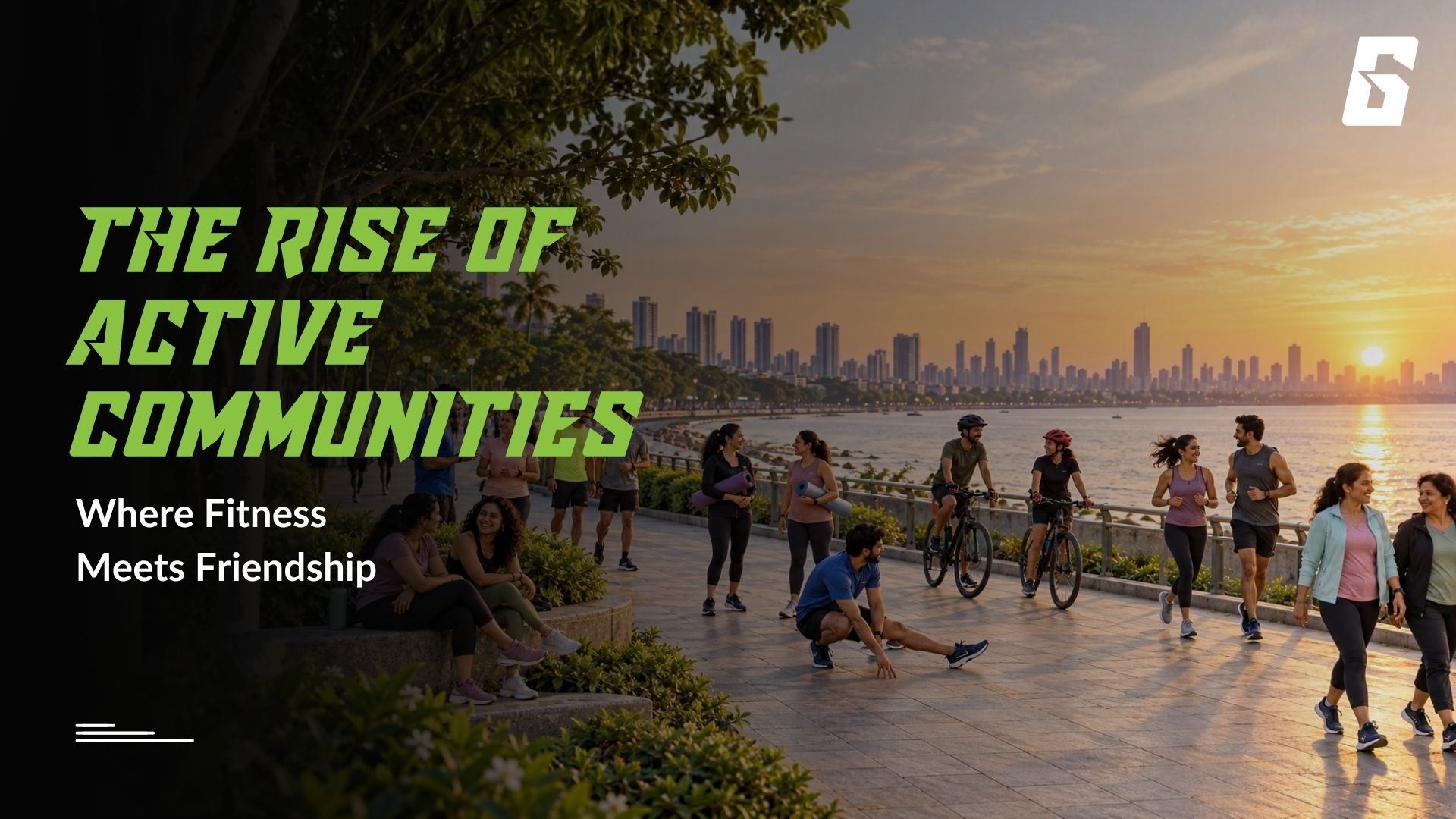
The Rise of Active Communities: Where Fitness Meets Friendship



General Fitness
By: GALF
29 Sep 2026
For a long time, fitness was seen as a personal pursuit. You worked out alone. You chased personal records. You measured success in kilometers, kilograms, or calories. That picture is changing.
Today, one of the strongest drivers of consistency isn't a new workout plan or wearable technology. It's community. Running clubs are filling city streets before sunrise. Weekend cyclists are forming organized groups. Recreational pickleball, padel, and hiking communities are bringing together people who may have never considered themselves "fitness enthusiasts".
People are no longer showing up to exercise. They're showing up for each other.
A 2026 Wellness Watch report from ABC Fitness found that 67% of members consider community the biggest driver of motivation and accountability in their fitness routine, while 57% say fitness communities significantly influence their long-term commitment to an active lifestyle.
The shift isn't accidental. Loneliness, hybrid work, and increasingly digital lifestyles have changed how people build relationships. Fitness has quietly become one of the few spaces where movement and meaningful human connection happen at the same time.
A 2026 systematic review of 21 studies on adult group fitness found that social-relational factors such as group identification, social cohesion, and social attraction can play a role in continued participation, alongside factors such as self-efficacy and motivation.
Community creates accountability, but it also creates belonging. It becomes much harder to skip a morning run when ten other people are waiting.
The biggest shift isn't necessarily a new workout. It's shared movement. Across cities, people are coming together through:
● running clubs
● cycling groups
● walking communities
● yoga collectives
● weekend hikes
● recreational sports
● hybrid training groups
These communities make it easier to start and easier to keep showing up. You have people to train with, a reason to turn up, and an experience that goes beyond the workout. As we explored in MyGALF's “The Link Between Physical Fitness and Mental Clarity,” regular movement can also support mood, stress management, and mental wellbeing.
The benefit of an active community isn't only physical. Connection matters too. The World Health Organisation's 2025 report on social connection identifies strong social connections as important to physical and mental health, while loneliness and social isolation are associated with poorer health outcomes. That makes friendship more than an added benefit of group fitness. It can be part of what keeps people coming back.
Joining a community is one thing. Being ready for the activity is another. A weekend hike, an early morning run, or a long group ride can demand very different things from your body and your gear. The right equipment can make these experiences more comfortable so that the focus stays on the activity and the people you're sharing it with.
For different kinds of group training, the right equipment can support the experience without becoming the focus. For functional and movement-based training, Asthras Mace brings a different kind of challenge to workouts, with training centred around movement, coordination, strength, and control. For those who prefer training at home, the Healthtrek Resistance Power Toning Tubes offer a simple way to add resistance to strength, functional, yoga, HIIT, and group workouts.
The goal isn't to own more fitness gear. It's to have the right support for the activities you actually enjoy.
And when the experience feels right, you're more likely to come back for the next one.
The future of fitness isn't just about individual goals. It's also about the communities that make movement easier to sustain.
As we explored in “From Managing Burnout to Preventing It,” the environments we create around health and wellbeing can shape how consistently we move, recover, and perform.
Sometimes, what keeps us moving isn't the goal itself, but the people we share the journey with.
Fitness is changing.
For many people, the biggest motivation isn't chasing a personal best or closing a fitness ring anymore. It's having people to show up with.
From early morning running clubs to weekend hikes and cycling groups, active communities are making movement more enjoyable, more consistent, and a lot less intimidating. Along the way, they're creating something just as valuable as better fitness: genuine connection.
This blog explores why exercising together helps us stay committed, how community shapes long-term wellbeing, and why the future of fitness may be less about competition and more about belonging.
Because sometimes, the best reason to keep moving is knowing you won't be doing it alone.