
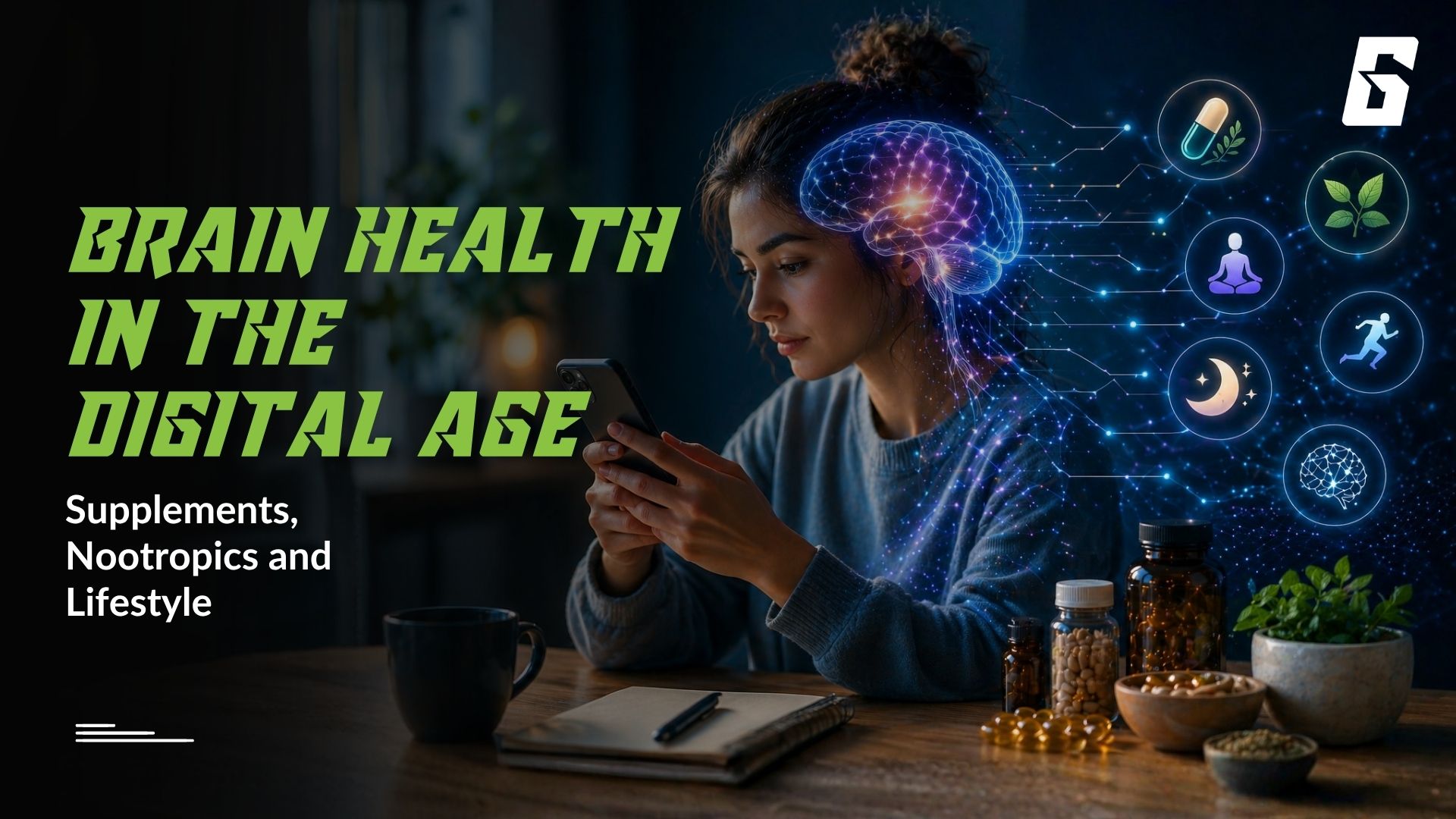
Brain Health in the Digital Age: Supplements, Nootropics, and Lifestyle



General Fitness
By: GALF
27 Apr 2026
Screens are no longer optional. Work, communication, and even downtime now run through them. The result is a constant cognitive load that most people don’t consciously register.
What many describe as “feeling tired” today is often not physical fatigue. It’s mental exhaustion, reduced focus, scattered attention, and a sense of being constantly switched on.
Brain health, in this context, is no longer just a medical topic. It’s a daily performance factor.
Extended screen exposure changes how we think and function.
Common patterns include:
● reduced attention span from constant switching
● difficulty sustaining deep focus
● increased mental fatigue even without physical effort
● disrupted sleep cycles due to blue light exposure
● reliance on stimulation (caffeine, scrolling) to stay alert
The issue isn’t screens themselves. It’s the lack of recovery between them.
What makes this more challenging is that the brain rarely gets true downtime anymore. Even moments of rest are often filled with passive consumption, scrolling, short videos, or notifications. This prevents the brain from fully resetting between tasks.
Over time, this constant low-level stimulation reduces the ability to focus deeply, increases cognitive fatigue, and makes even simple tasks feel effortful. The result isn’t burnout in the traditional sense, but a steady decline in mental clarity and attention.
Brain performance depends on a few underlying systems that are often overlooked:
● Hydration → even mild dehydration can affect focus and memory
● Micronutrient intake → supports neural function and resilience
● Sleep quality → restores cognitive capacity
● Blood flow and oxygen delivery → essential for sustained mental effort
● Recovery time → prevents overload
When these are inconsistent, mental clarity drops quickly, even if everything else seems fine.
Modern routines don’t always support consistent nutrition, and platforms like MyGALF make it easier to access clean, functional products that support daily cognitive and physical performance without overcomplicating routines.
Irregular meals, long work hours, and high cognitive demand create gaps. This is where targeted support can help.
● Micronutrient support: Greens blends like ElectroFizz Supergreens Superfood Powder help support antioxidant balance and provide a concentrated source of plant nutrients, especially when daily intake is inconsistent
● Circulation and oxygen delivery: ElectroFizz Freeze Dried Beetroot Powder Nitric Oxide Booster supports nitric oxide production, which plays a role in improving blood flow, relevant for both physical and cognitive performance
● Hydration and electrolyte balance: ElectroFizz Cramp Assault Hydration Powder helps maintain fluid balance during long workdays, which directly impacts focus and mental endurance
These are not replacements for meals or habits. They simply help maintain consistency where routines fall short.
Used correctly, these kinds of additions help stabilise energy rather than spike it. Unlike stimulants that provide short bursts of alertness, consistent hydration and nutrient support create a more stable baseline for focus throughout the day.
This becomes especially important in environments where cognitive demand is continuous, long work hours, screen-heavy roles, or high-pressure decision-making.
Nootropics are often positioned as quick solutions for focus and productivity.
They can:
● improve short-term alertness
● reduce perceived fatigue
● support concentration in high-demand situations
But they have limitations.
Without proper sleep, hydration, and nutrition, their effectiveness drops significantly. They can enhance performance, but they cannot compensate for poor fundamentals.
This also reflects a broader shift in how people approach performance and wellbeing. In “From Managing Burnout to Preventing It,” we explored how consistent support systems, rather than reactive fixes, lead to more sustainable outcomes across both work and health.
Before adding anything new, a few simple changes can make a noticeable difference:
● taking breaks between long screen sessions
● maintaining a consistent sleep schedule
● reducing late-night screen exposure
● incorporating daily movement
● managing caffeine intake instead of relying on it
These are not dramatic changes. But they create the conditions for better cognitive performance.
Mental clarity is closely tied to how well the body is supported.
We explored this connection in our blog “The Link Between Physical Fitness and Mental Clarity,” which looks at how movement, physical health, and recovery directly influence focus, decision-making, and cognitive performance.
The takeaway is simple: when the body is supported, the brain performs better.
You don’t need to optimise everything.
You need to:
● reduce unnecessary cognitive overload
● support your body consistently
● maintain hydration and nutrition
● prioritise recovery
Because in a world that constantly demands attention,
clarity is no longer optional, it’s an advantage.
Mental fatigue isn’t always about doing too much. Sometimes, it’s about never really switching off.
In a screen-heavy world, focus, clarity, and sustained attention are becoming harder to maintain, not because we lack discipline, but because our environment is constantly demanding it.
This blog looks at how everyday factors like hydration, nutrition, and recovery quietly shape cognitive performance, and how small, consistent adjustments can help you think and function better through the day.
Explore how to support your brain, not just push it, on MyGALF.