
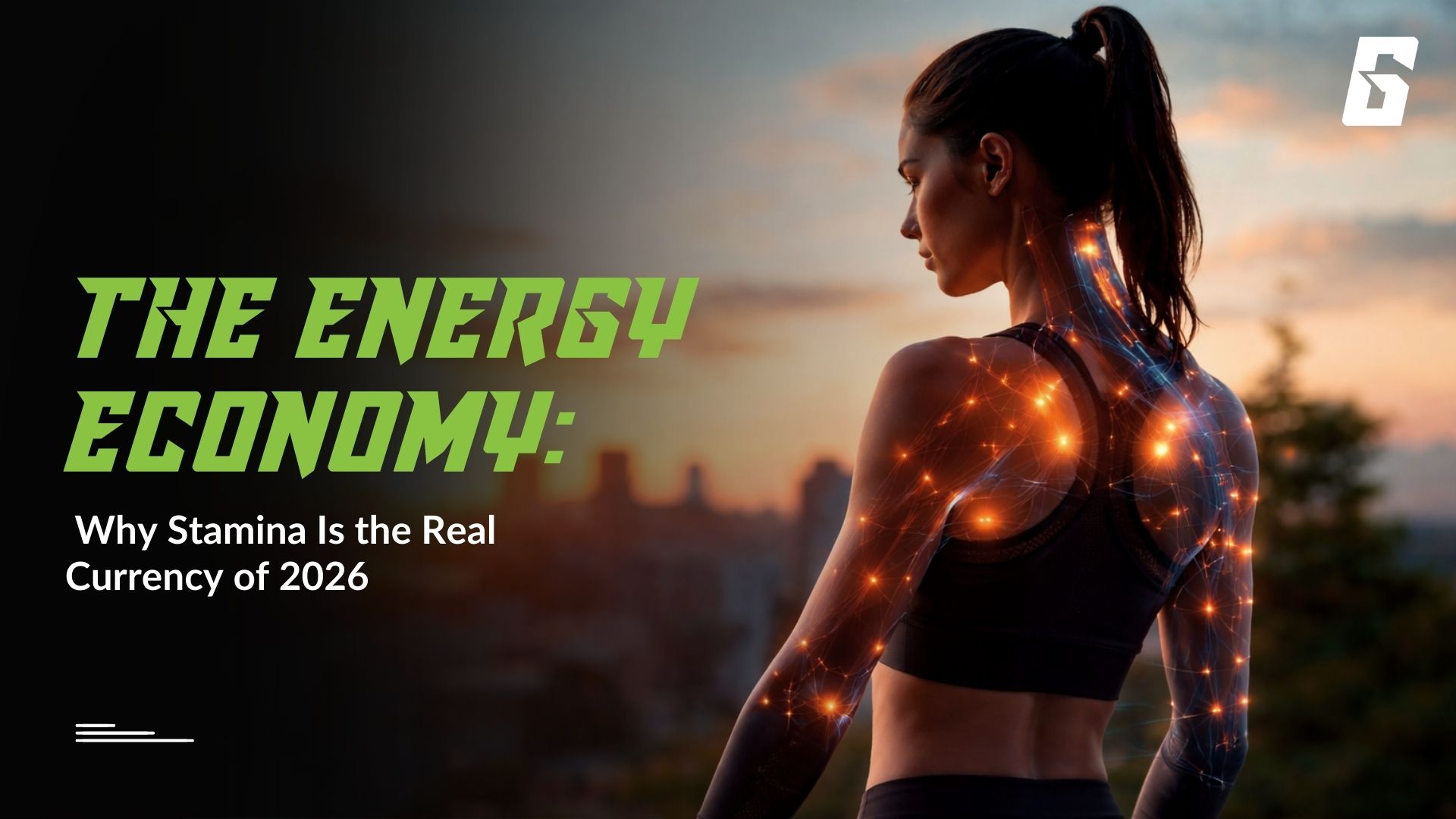
The Energy Economy: Why Stamina Is the Real Currency of 2026



General Fitness
By: GALF
06 Mar 2026
“The Energy Economy: Why Stamina Is the Real Currency of 2026”
Fatigue has become a shared condition.
Across industries, age groups, and lifestyles, people are reporting the same thing: not a lack of ambition, but a lack of energy. What we’re seeing isn’t widespread laziness or disengagement. It’s depletion.
Burnout is no longer an individual problem. It’s systemic.
For years, hustle culture rewarded output without questioning sustainability. Long hours were considered commitment. Constant availability became a proxy for value.
But intensity, sustained without recovery, has a cost.
The always-on model, perpetual notifications, compressed timelines, and blurred boundaries have revealed their limits. Productivity didn’t collapse overnight. It eroded slowly, through exhaustion, reduced focus, and declining resilience.
What’s emerging now is not a rejection of ambition but a reassessment of energy.
Stamina has traditionally been framed as something physical. Endurance. Strength. Capacity.
In reality, the most valuable forms of stamina today are less visible:
● mental stamina to sustain focus across long periods
● emotional resilience in uncertain, high-pressure environments
● decision-making endurance when cognitive load is constant
● the ability to remain clear without relying on adrenaline
Stamina has become a life skill, one that extends far beyond fitness.
The demands of modern life are not slowing down. Work is more cognitive. Attention is more fragmented. The margin for error is smaller.
In this context, performance is no longer about bursts of effort. It’s about consistency.
Those who manage their energy effectively outperform those who rely on intensity. Not because they work harder, but because they can sustain clarity, presence, and output over time.
Stamina is becoming a form of future-proofing.
Despite the proliferation of “optimisation” culture, the foundations of sustained energy remain unchanged:
● sleep quality
● adequate recovery
● consistent hydration
● clean, predictable nutrition
There are no shortcuts here. Energy doesn’t respond well to hacks.
One of the simplest ways to build long-term stamina is brisk walking. Unlike high-intensity workouts that rely on short bursts of energy, brisk walking supports cardiovascular health, lung capacity, and endurance without placing excessive stress on joints. It is accessible across age groups and easier to sustain consistently.
Research shows that even 15 minutes of brisk walking a day can reduce mortality risk by nearly 20%, highlighting how small, regular movement habits can significantly improve long-term health. Studies also suggest that adding just a few minutes of brisk walking daily may extend life expectancy, reinforcing the idea that stamina builds through steady habits rather than extreme effort.
For those who prefer a more natural movement pattern, barefoot-style walking shoes can also support posture, foot strength, and balance during regular walking routines.
We explored this shift in more detail in our recent GALF blog, From Managing Burnout to Preventing It, which looks at how energy-aware work design and recovery-first thinking support sustainable performance.
Burnout culture is oriented toward accumulation: more hours, more output, more pressure.
Balanced performance is oriented toward preservation.
The objective isn’t doing less. It’s lasting longer.
That shift requires reframing rest as functional, recovery as necessary, and boundaries as performance tools rather than limitations.
Stamina is rarely lost in a single moment. It’s worn down through patterns:
● skipped meals or erratic nutrition
● dehydration normalised as “busy”
● recovery postponed indefinitely
● fatigue ignored rather than addressed
● lack of simple daily movement like walking
Over time, these decisions shape how much energy remains available, not just for work, but for thinking, creating, and adapting.
This is also where supportive tools can play a role, not as shortcuts, but as quiet stabilisers of daily energy.
Simple hydration support, like ElectroFizz Electrolyte Energy Drink (Lemon) or PawaHy Energy Drink, helps maintain fluid and mineral balance during long days without relying on stimulants or sharp spikes. These options bring electrolytes and quick hydration in formats that fit work, workouts, and travel alike.
Barefoot rooted shoes available on MyGALF also support natural walking patterns and make brisk walking a sustainable daily habit.
For recovery and structural support after challenging sessions, clean protein sources such as MenekiAbsolute Whey Protein Isolate Pro Series provide high-quality amino acids to help repair tissues and support adaptation over time.
And for micronutrient balance that contributes to overall resilience, from immunity to antioxidant support, ElectroFizz Supergreens and ElectroFizz Triple Immunity Booster help fill nutritional gaps that can otherwise wear down stamina across demanding days.
The goal isn’t stimulation. It’s sustainability.
In 2026, the most valuable resource will not be time, motivation, or speed. It will be sustained energy built through sleep, recovery, nutrition, and simple daily movement.
Those who protect it will remain effective longer. They will adapt better. They will create with more clarity and less friction.
Stamina is no longer a personal wellness concern. It’s an economic one. And increasingly, it’s the currency that matters most.